7 Ways Wineries Can Use QR Codes in the Tasting Room
Discover seven practical ways wineries can use QR codes in the tasting room to share wine information, tell their story, encourage sales, promote wine clubs, and understand visitor engagement.

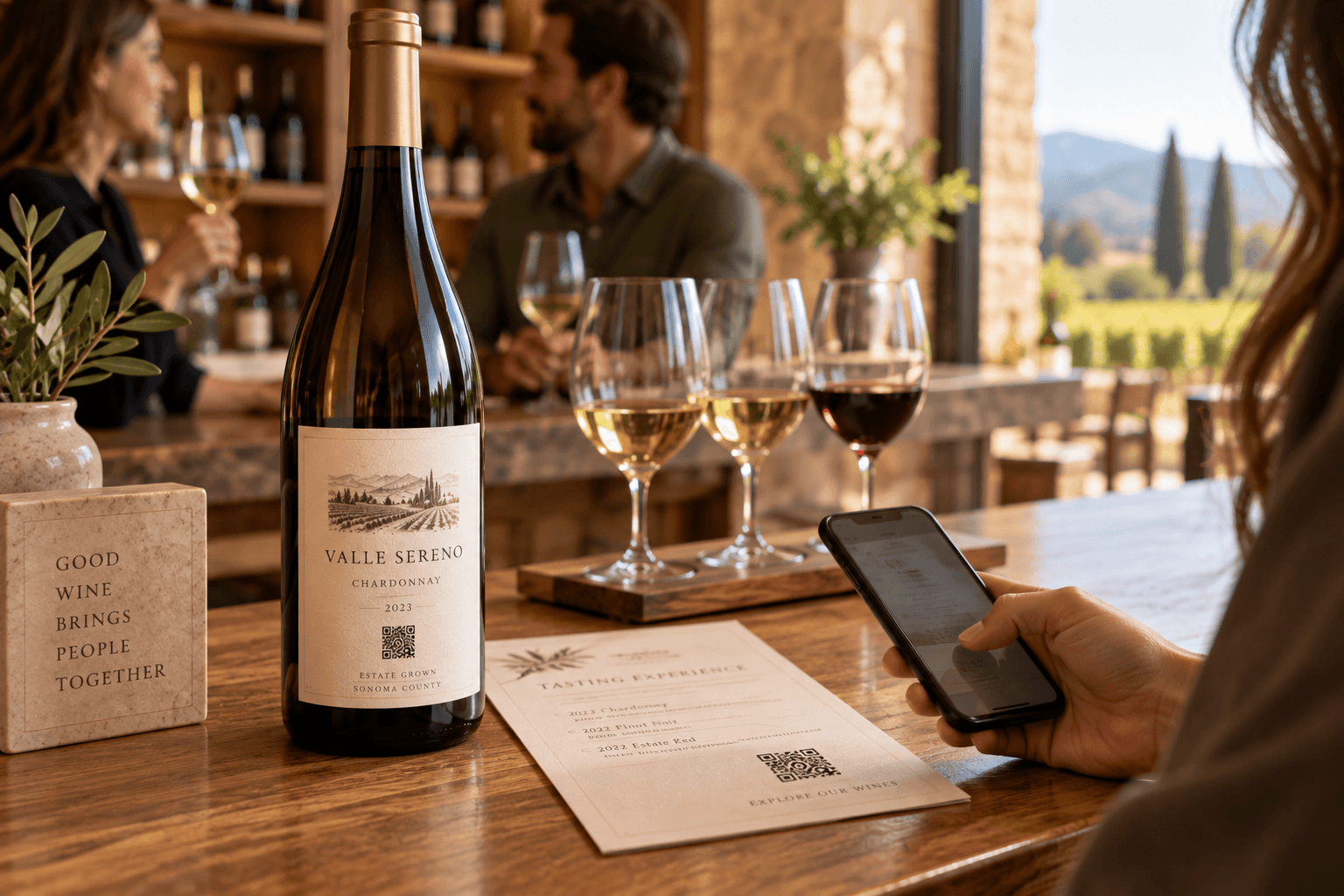
A tasting room gives wineries something that is increasingly difficult to create online: a customer's full attention.
Visitors are already tasting the wine, looking at the bottles, asking questions, and learning about the winery. A well-placed QR code can make it easier for them to keep exploring without filling the tasting room with signs, brochures, and printed materials.
The key is to give people a reason to scan.
Instead of placing the same QR code everywhere, think about what a visitor might want to do at each point in their tasting room experience.
Here are seven practical ways wineries can put QR codes to work.
1. Give guests more information about the wine they are tasting
A tasting flight can introduce someone to several wines in a short period of time. Remembering the details of every bottle is another matter.
A QR code on a tasting sheet, price list, or other tasting-room material can give visitors an easy way to access more information about a wine from their phone.
With Winetraqr, wineries can create digital labels containing product information such as ingredients and nutrition details. The pages are mobile optimized, so visitors can access them directly from a smartphone without installing an app.
Winetraqr QR codes are not limited to bottles. They can also be used on materials such as price lists and information sheets.
That can be particularly useful when someone wants to revisit a wine after the person leading the tasting has moved on to the next pour.
2. Turn your tasting menu into a digital starting point
Your tasting menu is already in front of almost every visitor, which makes it a natural place for a QR code.
But the destination matters more than the code itself.
Rather than sending visitors to a generic homepage, consider what would be most useful at that exact moment.
A QR code could help a guest explore the wines in the tasting, learn more about the winery, or move from a printed menu into a broader mobile experience.
The best approach is contextual.
A visitor should be able to look at the code and immediately understand why scanning it is useful.
A simple instruction such as "Explore our wines" gives the QR code a purpose rather than leaving guests to guess what is behind it.
3. Tell the winery story
People visiting a tasting room are not only buying a beverage. They are discovering where it came from.
A QR code can provide another entry point into that story.
Winetraqr Premium marketing pages allow wineries to build a branded, mobile-optimized page with text, photos, links, and information about the winery. The page can also highlight active wines.
That gives wineries space to share things that may not fit naturally into a tasting menu:
- The history of the winery
- Vineyard or estate photography
- The philosophy behind the wines
- Information about the people behind the winery
- Links to social channels and other winery resources
This does not need to replace conversations with tasting-room staff.
It can support them.
Someone who becomes interested in the winery during a tasting can continue exploring from their phone, whether they are sitting at the bar or returning to the page later.
4. Make it easier to buy a favorite wine
A guest tastes six wines and loves the third one.
What happens next?
Reducing the steps between interest and action can make the tasting-room experience more useful for both the visitor and the winery.
Winetraqr marketing pages can include links to a winery's online shop. A tasting-room QR code can therefore provide visitors with a straightforward path from discovering the winery to finding its online sales destination.
This can also be useful after the visit.
Instead of asking someone to remember a website address or search for the winery later, the digital destination is already available on their phone.
The important part is to keep the experience simple. If the goal of a QR code is shopping, make that clear instead of sending the visitor through several unrelated pages first.
5. Promote your wine club
The tasting room is one of the most natural places to introduce a wine club.
Guests have already made the trip to the winery and experienced the wines firsthand. If they want to continue the relationship, make the next step easy to find.
Winetraqr marketing pages can include links to external destinations, including a wine club signup page.
A winery could place a QR code near the tasting bar, on a take-home card, or alongside information about its club.
Again, context matters.
"Join our wine club" is a much stronger reason to scan than an unexplained QR code in the corner of a sign.
The technology should remove friction from the experience, not add another step visitors have to decipher.
6. Help visitors book their next tasting
A good tasting can lead to another visit.
Winetraqr marketing pages support links to tasting-booking destinations, giving wineries another practical use for QR codes in the tasting room.
This could be especially useful for wineries offering different experiences, such as reserve tastings, vineyard visits, seasonal events, or other bookable experiences managed through their existing booking platform.
A visitor who enjoyed today's tasting can scan while their interest is still high and access the winery's booking destination.
The same idea can work on printed materials guests take home.
The QR code does not have to stop being useful when someone walks out of the tasting room.
7. Learn which tasting-room placements get scanned
QR codes can also help wineries understand engagement.
Winetraqr Premium allows wineries to create multiple QR codes for the same wine and track them separately. The codes still point to the same up-to-date wine data, but each can have its own name and scan data.
That creates some useful possibilities.
For example, a winery could use separate codes for:
- A tasting menu
- A printed information sheet
- A tasting-room display
- A seasonal promotion
- A wine event or fair
Winetraqr's analytics can then provide information about QR code activity, including scan volume and geographic engagement.
Instead of assuming which placements visitors use, wineries can compare actual scan activity and use those insights when planning future materials.
A note for wineries selling wine in the EU
Marketing QR codes and compliance QR codes should not automatically be treated as the same thing.
EU wine e-label rules place restrictions on electronic pages used to provide mandatory ingredient and nutrition information. In particular, mandatory electronic product information must remain separate from content intended for sales or marketing.
For that reason, Winetraqr recommends that EU wineries use a separate secondary QR code for their winery marketing page and marketing materials.
This distinction can actually make the tasting-room experience clearer.
One QR code can serve the regulatory purpose associated with the wine, while another can have an obvious marketing purpose such as:
Discover our winery
Shop our wines
Join our wine club
Book another tasting
Visitors know what they are scanning, and the winery keeps the two experiences appropriately separated.
Make every QR code earn its place
Adding more QR codes does not automatically create a better tasting-room experience.
Every code should answer a simple question:
Why would a visitor want to scan this right now?
If there is no clear answer, the code probably does not need to be there.
Start with the moments where a digital next step genuinely helps. Give guests more information about a bottle. Let them explore your winery story. Help them find your shop, wine club, or booking page.
Then make the purpose of each code clear.
Winetraqr lets wineries create and manage QR codes and digital wine labels from one place. With Winetraqr Premium, wineries can also build a branded marketing page, create multiple QR codes for the same wine, and access scan analytics.
Create your Winetraqr account and start building QR experiences for your wines and winery.
Unlock the story behind every bottle
- Unlimited wines and QR codes
- Automatic language translation
It's free to sign up. No credit card needed.