New Vintage, New Digital Label? What Wineries Should Update After Harvest
Preparing a new wine vintage? Review the product, nutrition, ingredient, allergen, translation, and QR code details wineries should check before the next release.

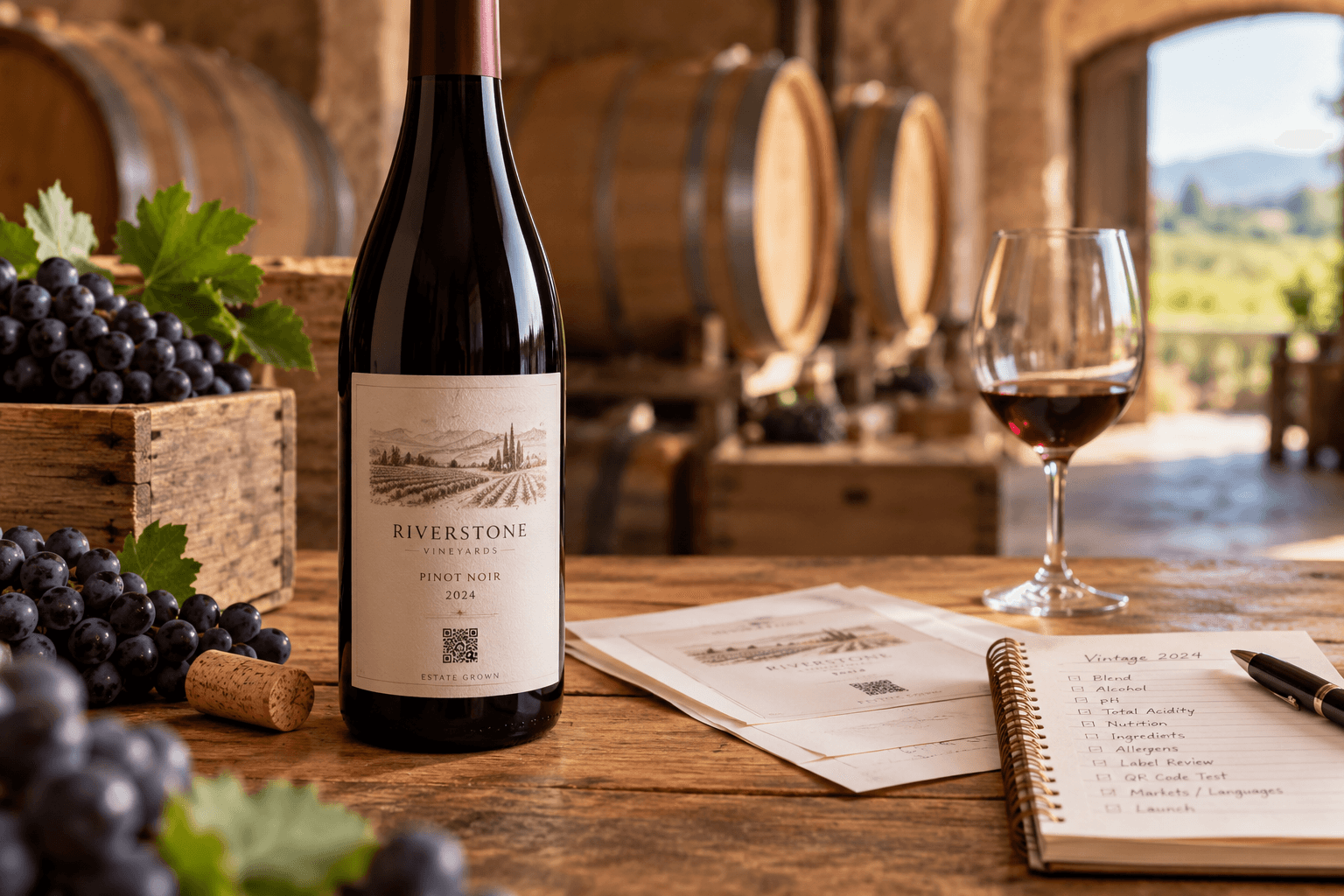
Harvest may mark the end of one season in the vineyard, but for winery teams it also starts another important process: preparing the next vintage for release.
A new vintage can bring changes to alcohol, nutrition values, ingredients, production details, and the markets where a wine will be sold. That makes the period after harvest a useful time to review the information customers will eventually see on the bottle and through its digital label.
Instead of copying last year's information and assuming everything still applies, wineries can use the new vintage as a natural checkpoint.
Here is what to review before the next bottles reach the market.
1. Start with the wine itself
A new vintage may share the same name, branding, and general style as the previous release, but it is still worth treating its product information as something that needs to be verified.
Start with the basics:
- Wine name
- Vintage
- Grape variety or varieties
- Alcohol content
- Producer information
- Origin and other relevant product details
Some fields may remain unchanged from one year to the next. Others may not.
The goal is simple: make sure the digital information represents the bottle a customer is actually holding, rather than automatically carrying over details from the previous vintage.
2. Review nutrition values
Nutrition information is another area where last year's data should not simply become this year's data by default.
Once you have the appropriate analysis for the new wine, review the values used for your digital label and update them where necessary.
For wineries selling in the EU, the full nutrition declaration can be provided electronically through a QR-linked digital label, while the required energy information must also appear on the physical label.
That makes accuracy especially important. Your physical packaging and digital information should be planned together rather than treated as separate projects.
3. Check the ingredient list
Production decisions can change between vintages, even when the finished wines are intentionally consistent in style.
Review the ingredient information for the new vintage and confirm that the digital label accurately reflects the wine being released.
This is also a good opportunity to make the review part of your normal release workflow. Instead of checking digital-label information at the last minute, include it alongside lab analysis, packaging approval, and other pre-bottling tasks.
4. Confirm allergen information
Allergen information deserves its own check.
For wines sold under EU requirements, allergens must be disclosed on the physical label. The digital information associated with the wine should also remain accurate and consistent with the product.
Before approving the new vintage, compare your physical label and digital product information and resolve any discrepancies.
A QR code can make detailed information easier to manage, but it does not replace the need to verify what is printed directly on the bottle.
5. Review every market and language
A new vintage may also come with changes in distribution.
Perhaps this year's release is entering another EU country. Maybe a distributor is taking the wine into a new market. Or perhaps the markets are the same, but your product information has changed.
Either way, review the languages in which consumers need to access the information.
Winetraqr automatically translates digital labels into supported languages, helping wineries manage multilingual product information without creating a separate manual workflow for every language.
Translation still belongs on the pre-release checklist. Check names, wine-specific terminology, and other details that deserve human review before the vintage goes live.
6. Decide how to organize the new vintage
One common question is whether a new vintage means starting everything again.
Not necessarily.
Digital labeling gives wineries more flexibility than information permanently printed on packaging. With Winetraqr, wine details can be updated and reflected on the digital label without reprinting the QR code.
But that does not mean every vintage should simply overwrite the previous one.
Think about whether the new release needs to remain distinct from bottles of an earlier vintage that are still in distribution. If different bottles need to display different product, ingredient, or nutrition information, keeping those records clearly separated can help avoid sending consumers to information that belongs to another release.
The important question is not simply, "Can we update this label?"
It is, "Will every bottle that scans this code still show the correct information?"
7. Check the QR code before printing
Once the information is ready, test the complete experience.
Scan the QR code using more than one phone. Confirm that it opens correctly and that the digital label is easy to read on mobile.
Then review the actual information it displays.
A practical pre-print check should cover:
- Correct wine and vintage
- Current nutrition values
- Correct ingredient information
- Allergen information
- Required languages
- Working QR code
- Mobile readability
- Consistency between the physical and digital label
This final check is much easier before thousands of labels have been printed.
8. Keep compliance and marketing separate
The new vintage is also a natural marketing moment. Wineries may want to share tasting notes, vineyard stories, release announcements, shop links, or booking information.
Those experiences should not simply be added to an EU compliance e-label.
For EU wine e-labels, electronically provided mandatory product information must remain separate from marketing and sales content, and consumer data cannot be collected or tracked through the compliance page.
If you want to create a richer digital experience around the release, treat it separately from the compliance information.
Winetraqr supports branded winery marketing pages as a separate feature, allowing wineries to build a broader digital destination while keeping mandatory product information appropriately separated.
Make the digital-label review part of every vintage
Harvest already creates natural checkpoints across production. Digital labeling can become one of them.
When a new vintage is moving toward bottling and release, review its product details, nutrition information, ingredients, allergens, languages, and QR code experience alongside the rest of your packaging workflow.
Doing this early helps prevent outdated information from following a new wine into the market.
And because digital labels can be updated without reprinting the physical QR code, correcting and maintaining information becomes much simpler than relying entirely on printed packaging.
With Winetraqr, wineries can create and manage digital labels and QR codes from one place, update wine information when needed, and make product details accessible across supported languages.
Create your free Winetraqr account and prepare your next vintage's digital label before it reaches the bottling line.
Unlock the story behind every bottle
- Unlimited wines and QR codes
- Automatic language translation
It's free to sign up. No credit card needed.