7 Common EU Wine E-Label Compliance Mistakes Wineries Still Make
Avoid the most common EU wine e-label compliance mistakes. Learn what wineries often get wrong and how to ensure your digital labels meet current requirements.

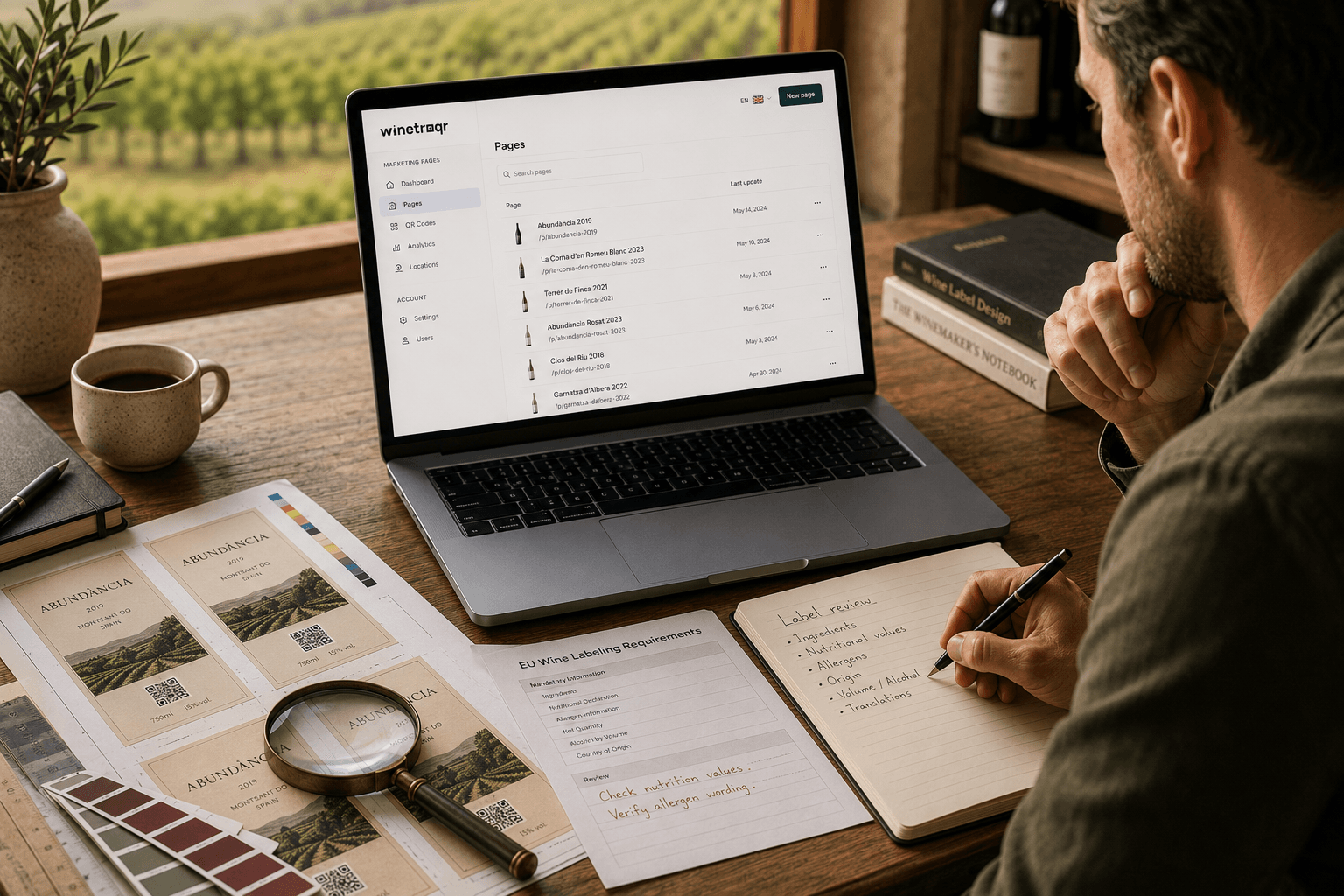
Digital wine labels have made it much easier for wineries to comply with EU labeling requirements. However, implementing an e-label isn't simply a matter of generating a QR code and placing it on the bottle.
Many compliance issues come from small oversights that are easy to avoid with the right process.
Here are seven of the most common mistakes wineries still make and how to avoid them.
1. Assuming the QR code is enough
Adding a QR code to a wine label doesn't automatically make it compliant.
The QR code must lead to a properly structured digital label containing the required information. Simply linking to a website or homepage is not enough.
2. Forgetting to test the QR code
A surprising number of QR codes are never tested before labels go to print.
Before bottling, scan every code using different devices to confirm it opens the correct digital label, loads quickly, and works consistently.
3. Mixing compliance with marketing
The digital compliance page should focus on providing mandatory product information.
Adding promotional banners, marketing messages, or unrelated content can create unnecessary compliance risks. Keep your compliance page separate from your marketing pages.
4. Publishing incomplete product information
Nutritional values, ingredients, and allergen information should always be reviewed before publishing.
A missing field or outdated information can quickly turn a compliant label into a non-compliant one.
5. Forgetting multilingual markets
Many wineries export to several countries but only review the digital label in one language.
Always verify that every translation is complete, accurate, and available to consumers in your target markets.
6. Reusing the wrong digital label
One of the easiest mistakes to make is linking multiple wines or vintages to the same digital label.
Each product should point to the correct information for that specific wine.
A quick review before printing labels can prevent expensive corrections later.
7. Choosing a platform that's difficult to update
Regulations evolve, product information changes, and mistakes occasionally need to be corrected.
If updating your digital labels requires replacing QR codes or reprinting bottles, the process quickly becomes expensive.
A platform with dynamic QR codes allows wineries to update information while keeping the same QR code already printed on the bottle.
Compliance doesn't have to be complicated
Most e-label compliance issues aren't caused by misunderstanding the regulations. They're caused by simple process mistakes.
Choosing the right platform, reviewing every label before printing, and keeping compliance information separate from marketing content can prevent the vast majority of problems.
With Winetraqr, wineries can create compliant digital wine labels, manage multilingual content, update information without changing QR codes, and confidently prepare every bottle for market.
Unlock the story behind every bottle
- Unlimited wines and QR codes
- Automatic language translation
It's free to sign up. No credit card needed.