79% of Shoppers Prefer Products with Scannable Information. What That Means for Wineries
Nearly 8 in 10 shoppers prefer products with scannable information. Discover what this trend means for wineries and how QR codes can improve compliance and customer engagement.

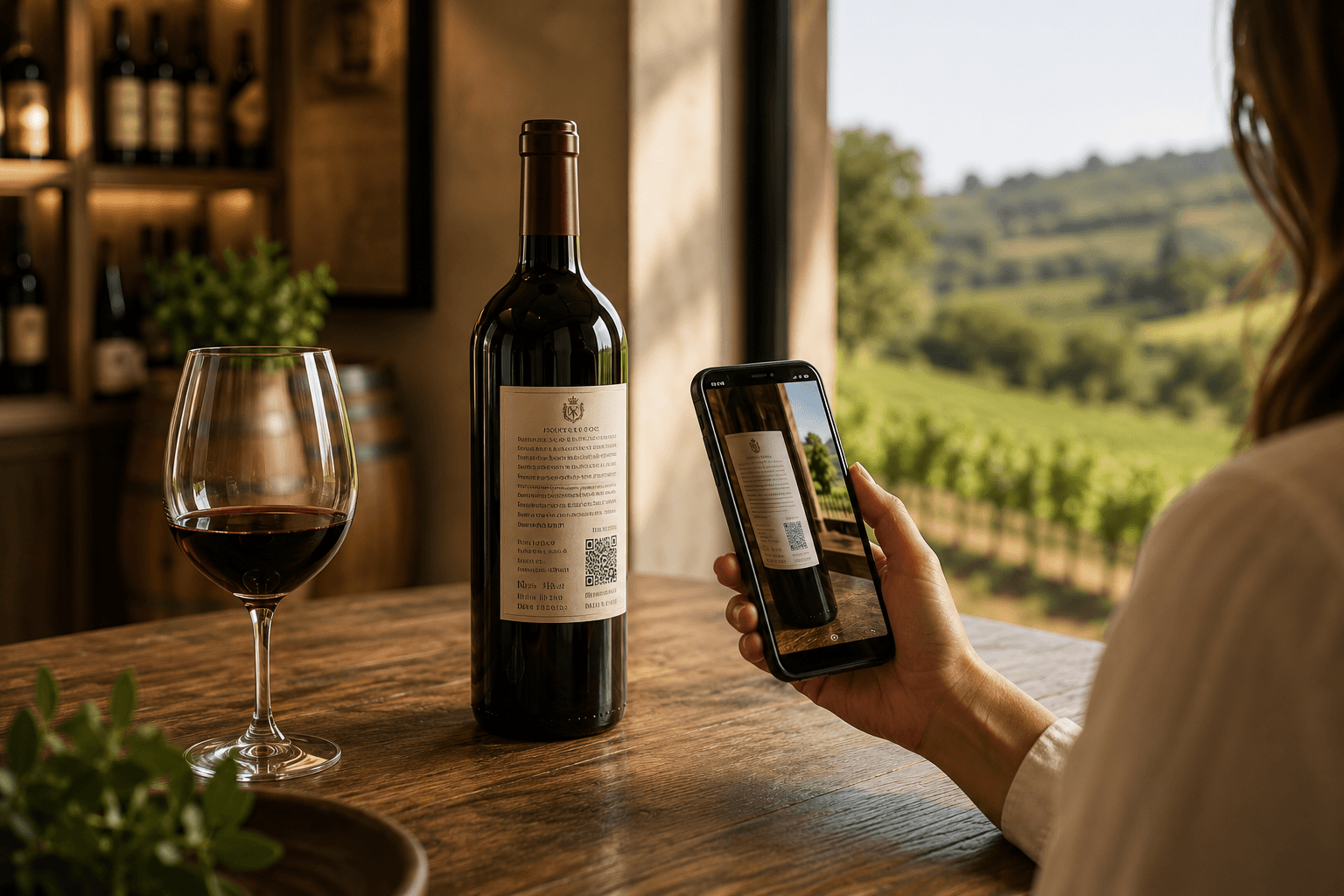
Consumers increasingly expect products to provide more information than can fit on the packaging.
Research shows that 79% of shoppers prefer products with scannable information, reflecting a growing demand for transparency and easy access to product details. From food and beverages to cosmetics and household goods, QR codes have become a familiar way to learn more before making a purchase.
For wineries, this shift is especially relevant. The QR codes many producers already use for digital wine labels can do much more than meet regulatory requirements. It's also important to distinguish between compliance QR codes, which provide the mandatory information required by regulations, and marketing QR codes, which can offer a broader brand experience and additional content for consumers.
Consumers expect more than what's on the label
A wine label has limited space, but buyers often want much more information before choosing a bottle.
They may be looking for:
- Nutritional values
- Ingredients and allergens
- Grape varieties
- Food pairing suggestions
- Sustainability information
- The story behind the winery
A QR code makes all of this information instantly available without overcrowding the physical label. Instead of replacing the bottle's design, it complements it with a richer digital experience. While compliance QR codes are designed to provide mandatory product information, marketing QR codes can be used to share additional content such as winery stories, videos, vineyard information, and other brand experiences.
Compliance creates an opportunity
Many wineries adopted QR codes to comply with EU digital labeling regulations.
But once a customer scans that compliance QR code, the experience doesn't have to stop with mandatory information. A separate marketing QR code can take consumers beyond regulatory information and into a richer brand experience.
A well-designed marketing QR code can introduce the winery, showcase sustainability practices, provide multilingual content for export markets, and help consumers better understand the wine they're about to enjoy.
Compliance becomes the starting point, not the final goal.
Better information benefits both customers and wineries
Easy access to information builds confidence and trust. Customers appreciate transparency, while wineries gain a flexible way to keep product information accurate without reprinting labels.
Digital labels can also be updated whenever product information changes and can support multiple languages from a single QR code. Some platforms, including Winetraqr, also provide scan analytics, helping wineries understand how customers engage with their wines.
Looking ahead
Consumer expectations continue to evolve, and digital product information is becoming part of the buying experience across many industries.
For wineries, QR codes are no longer just a compliance tool. They're an opportunity to provide better information, strengthen customer trust, and create a more engaging experience around every bottle.
The wineries that embrace this shift today will be better prepared for the expectations of tomorrow.
Unlock the story behind every bottle
- Unlimited wines and QR codes
- Automatic language translation
It's free to sign up. No credit card needed.