EU Wine E-Label Compliance Checklist for the 2026 Harvest
Preparing labels for the 2026 harvest? Use this practical checklist to make sure your wine e-labels meet EU requirements before your bottles reach the market.

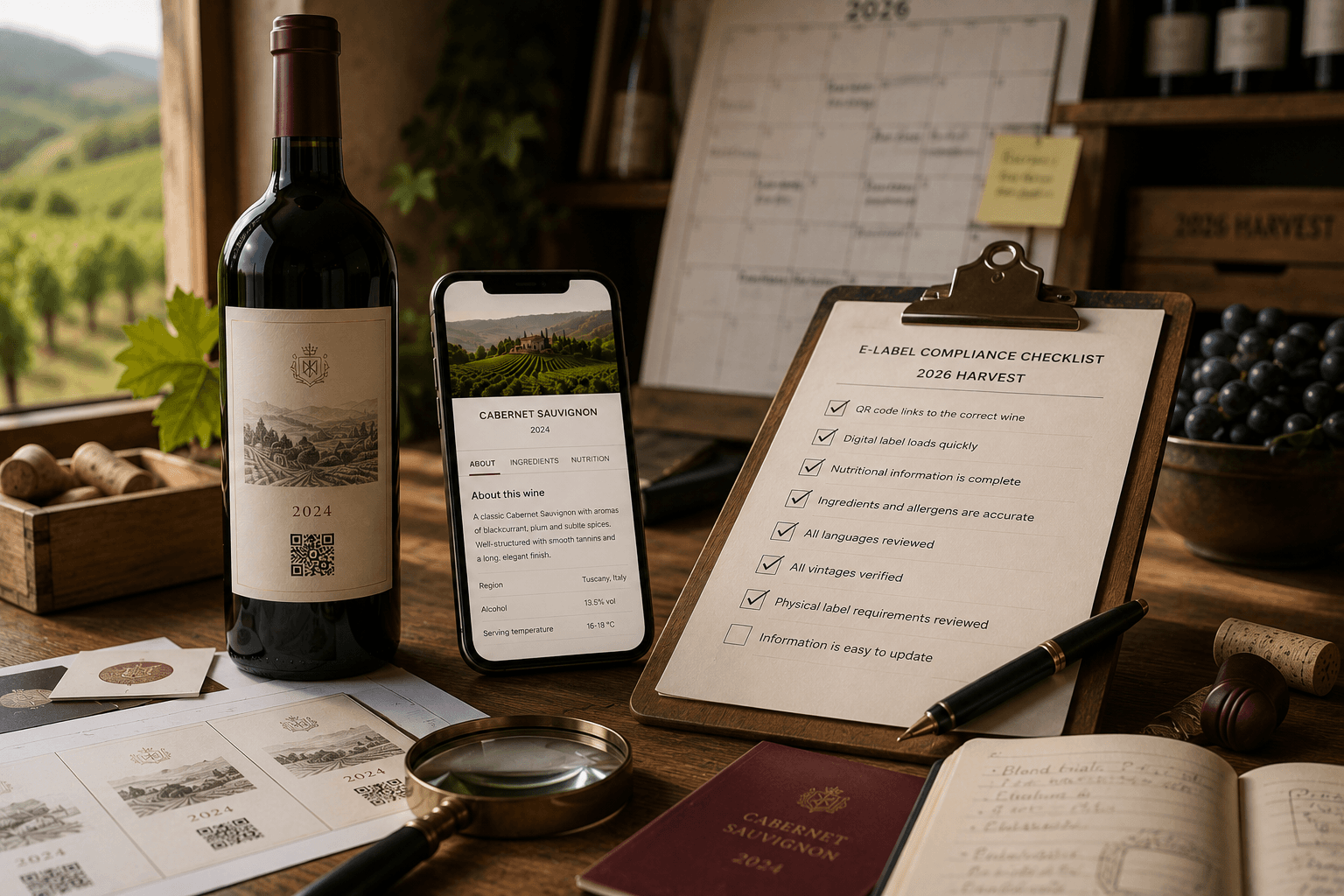
As the 2026 harvest approaches, many wineries are preparing new labels, reviewing product information, and ensuring their wines are ready for market.
If you're selling wine in the European Union, now is the ideal time to verify that your digital labels meet current requirements. A few simple checks before printing labels can save time, prevent costly reprints, and help avoid compliance issues later.
Use this checklist before releasing your next vintage.
✓ Confirm your QR code works
Every QR code should open the correct digital label quickly on both Android and iPhone devices.
Check that:
- The QR code is easy to scan.
- It links to the correct wine.
- The page loads quickly.
- The link is still active.
✓ Review nutritional information
Verify that the nutritional information displayed on the digital label is complete and accurate for the wine being sold.
Double-check values before publishing, especially if you've updated the recipe, vintage, or production process.
✓ Check ingredients and allergens
Ensure all required ingredients and allergen information is included and reflects the final product.
Review each wine individually rather than assuming similar products contain identical information.
✓ Test every language
If you export your wines, test each available language.
Confirm that:
- Translations display correctly.
- No information is missing.
- Product names remain consistent.
- Navigation works in every language.
✓ Verify every vintage
A common mistake is linking multiple vintages to the same digital label.
Review each wine to ensure the QR code opens the correct information for that specific vintage and product.
✓ Review your physical label
Remember that not all mandatory information belongs on the digital label.
Before printing, verify that your physical label still includes all information required to appear directly on the bottle for the markets where the wine will be sold.
✓ Make future updates easy
Choose a platform that lets you update information without replacing QR codes or reprinting labels.
This flexibility becomes especially valuable when regulations change or product information needs to be corrected after labels have already been printed.
A few minutes now can prevent problems later
Harvest season is busy enough without discovering labeling issues after bottles have been printed.
Taking the time to review your digital labels before production helps ensure a smoother release and gives consumers easy access to accurate product information from the first bottle onward.
Winetraqr helps wineries manage digital wine labels, QR codes, multilingual content, and product updates from one place, making it easier to stay compliant throughout every harvest.
Unlock the story behind every bottle
- Unlimited wines and QR codes
- Automatic language translation
It's free to sign up. No credit card needed.