How Multilingual Digital Labels Help Wineries Reach International Markets
Learn how multilingual digital wine labels help wineries comply with EU regulations, improve the customer experience, and support exports by providing product information in every customer's language.

Introduction
Expanding into international markets is both an exciting opportunity and a formidable challenge for wineries. One of the biggest hurdles? Navigating the tangle of language barriers and complex regulations. Customers abroad expect to understand exactly what they're buying, and those expectations are bolstered by strict laws, particularly in key regions like the European Union. That’s where multilingual digital labels step in. They offer a practical way for wineries to communicate transparently with a global audience, all while controlling costs and staying compliant. In this article, we’ll explore how these labels open doors to international markets and why solutions like Winetraqr are increasingly vital tools for modern wineries.
Why multilingual product information matters for exporting wineries
Imagine picking up a beautiful bottle of wine in a shop overseas, only to realize you can’t read a word on the label. Chances are, you’d hesitate before buying, or simply put it back on the shelf. For wineries, that moment spells lost sales and diminished brand trust. Accurate, easily accessible product information in a consumer’s native language isn’t just a nice-to-have; it’s the foundation of credibility. In fiercely competitive export markets, where rules and preferences shift from region to region, delivering clear, multilingual details signals professionalism and care.
What challenges do wineries face with printed labels for multiple markets?
Traditional printed labels might seem straightforward, but the realities can quickly become overwhelming. Each country brings its own maze of legal requirements and consumer expectations, forcing wineries to produce small, customized batches for every target region. The logistics? Complex. The costs? Always rising, think of printing, storage, and shipping, multiplied across every market. Then, there’s the physical label itself: a tiny canvas tasked with squeezing in a world of information, often in two (or more) languages. The results can look cramped, hard to read, and sometimes aesthetically compromised. And should regulations shift or a typo surface, entire batches of labels might have to be scrapped, leading to avoidable waste and unexpected expense.
How do digital labels display information in the visitor's language?
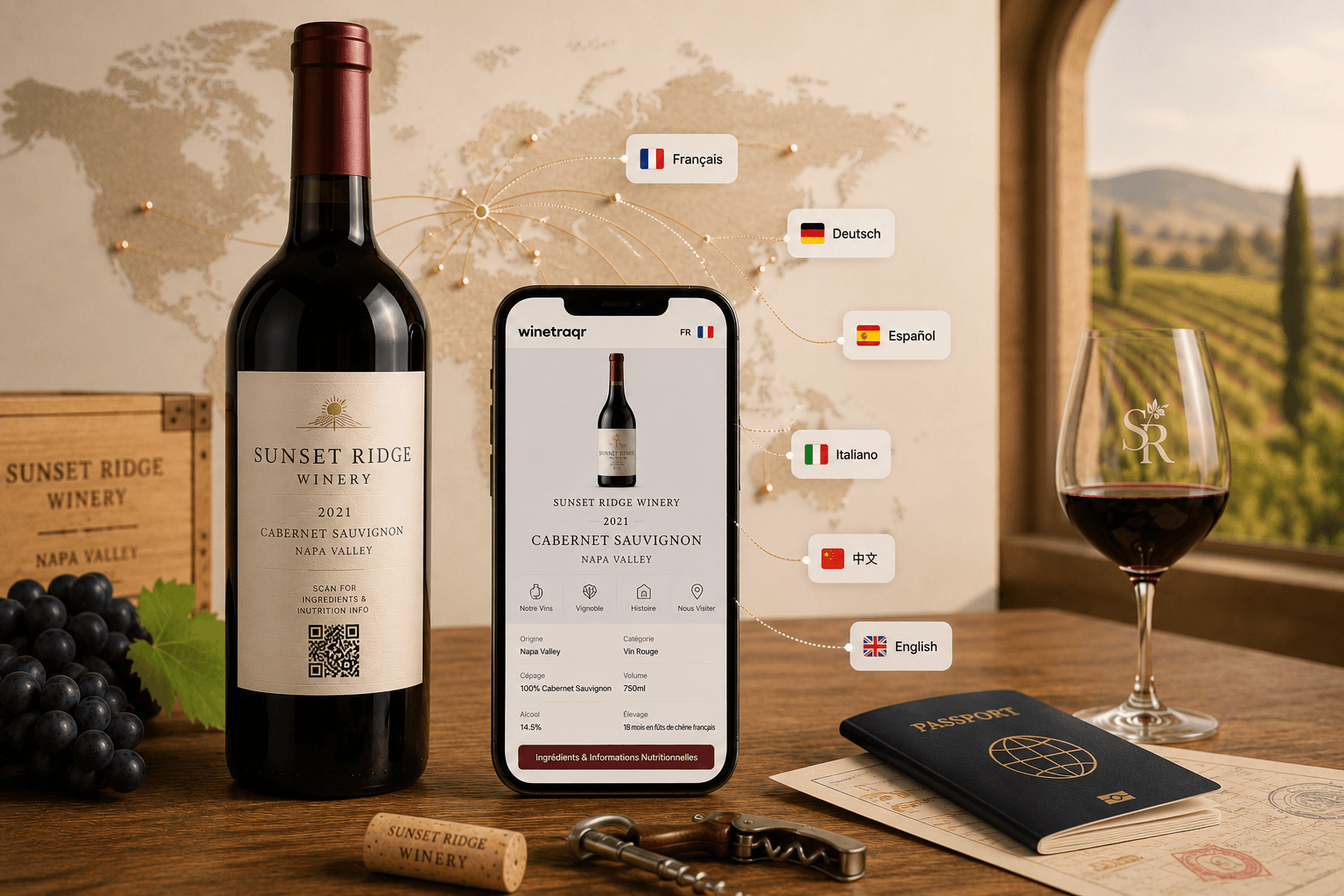
The technology behind digital labels offers a refreshing change. With a simple scan of a QR code on the bottle, customers are whisked away to a dynamic web page. Here’s where the magic happens: the page instantly adapts to the user’s device language. No more confusion. Plus wineries aren’t locked into outdated information. Digital labels can be updated at any time, no costly reprints or tedious relabeling required.
How do multilingual labels support EU compliance?
For anyone exporting to Europe, regulatory compliance is non-negotiable. EU Regulation 2021/2117 made it clear: nutritional and allergen information must be accessible and easily understood in the consumer’s language. Digital labels provide a seamless way to deliver this no physical space limitations, no ambiguity, just straightforward facts where and when they’re needed. Winetraqr was built with these rules in mind, offering translation tools and automatic compliance checks. The label updates online, and wineries avoid the headache (and liability) of outdated disclosures.
Who benefits from multilingual digital labels?
The impact of multilingual digital labels ripples across the entire wine ecosystem:
- Wineries gain flexibility, cut costs, and stay ahead of shifting regulations with less risk of costly mistakes.
- Distributors and retailers enjoy simpler logistics, as a single label can serve multiple markets without endless SKU management.
- End consumers feel reassured by transparency and authenticity, building greater trust before every pour.
Conclusion
Navigating the complexities of international wine sales requires more than just great wine in the bottle. Wineries need solutions that are both efficient and agile, tools that foster trust across borders and keep them in the good graces of regulators. Multilingual digital labels deliver on all fronts, allowing wineries to share detailed, up-to-date information wherever their bottles travel.
Planning to scale your winery’s global reach? A robust digital label solution like Winetraqr is the smart investment to streamline compliance, communication, and customer experience.
Unlock the story behind every bottle
- Unlimited wines and QR codes
- Automatic language translation
It's free to sign up. No credit card needed.