Can an EU Wine E-Label Include Tasting Notes, Shop Links, or Marketing Content?
Can EU wine e-labels include tasting notes, shop links, or promotions? Learn what EU rules allow and how wineries can keep marketing separate.

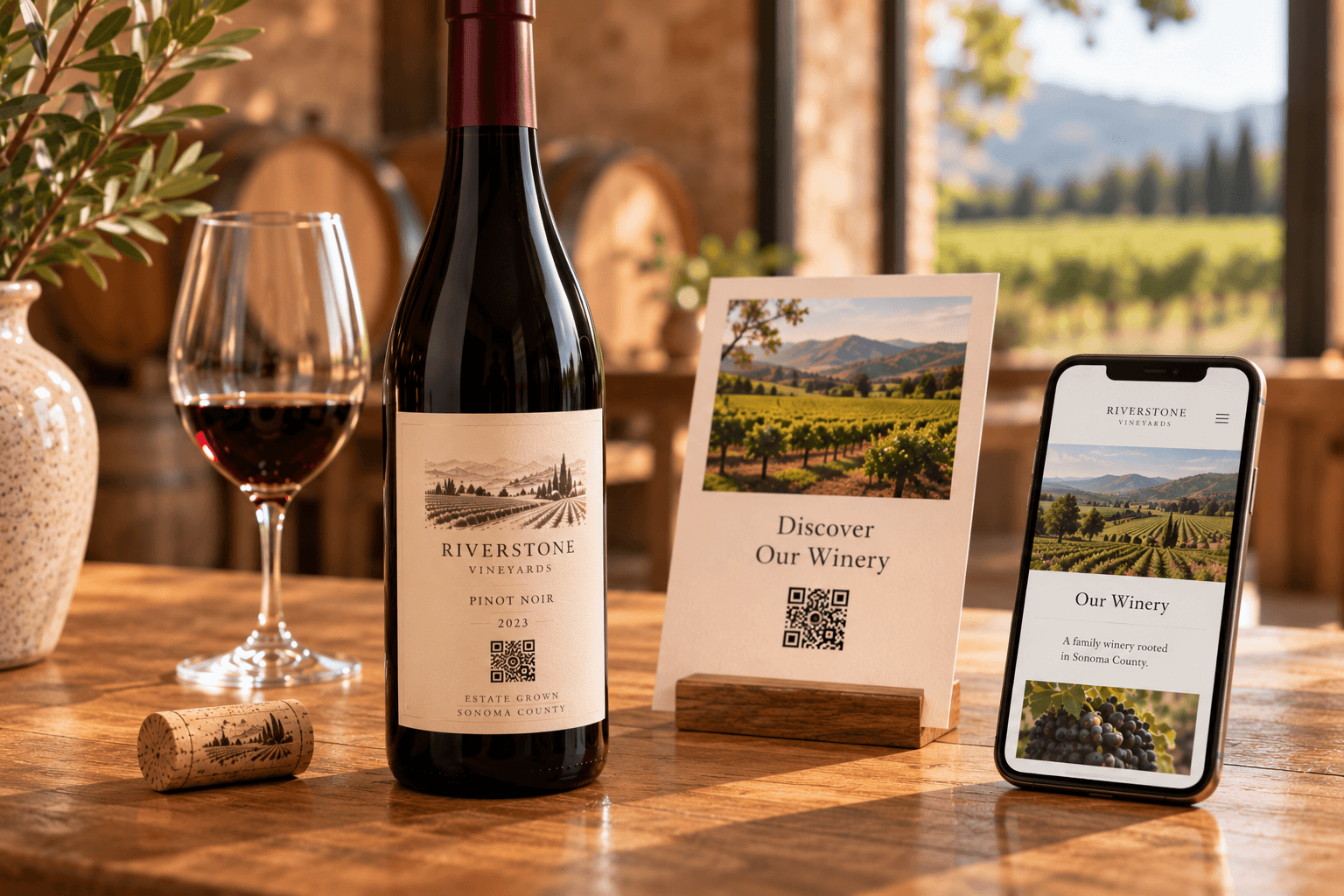
A QR code on a wine bottle can give customers access to much more than ingredients and nutrition information.
It could lead to tasting notes, vineyard photography, a winery's history, an online shop, or a booking page for the next tasting.
But for wineries using QR codes to meet EU wine labeling requirements, there is an important distinction between providing mandatory product information and promoting the winery.
An electronic label used to provide mandatory EU wine information must not display that information together with content intended for sales or marketing purposes.
So where do tasting notes, shop links, and winery stories belong?
Here is how to distinguish compliance information from marketing content and how wineries can offer both experiences.
What information belongs on an EU wine e-label?
EU wine labeling rules require applicable wines to provide a nutrition declaration and a list of ingredients.
Wineries can provide the full information on the physical label or use permitted electronic means, such as a QR code, for the full nutrition declaration and ingredient list.
When this information is provided electronically, certain details still need to appear on the physical label, including the energy value and required allergen indications.
The electronic destination should give consumers direct access to the mandatory information for the specific wine.
For example, a compliance e-label may contain:
- The wine's identity
- The list of ingredients
- The full nutrition declaration
- Relevant allergen information
- Other required or permitted factual product information
The page should present this information clearly and without promotional distractions.
This is where the distinction between a compliance e-label and a winery marketing page becomes important.
Can an EU wine e-label include tasting notes?
Promotional tasting notes should be kept separate from the mandatory electronic label.
Tasting notes are useful for explaining a wine's character. They might describe aromas, flavors, texture, or food pairings.
For example:
"An elegant Pinot Noir with ripe cherry aromas, delicate spice, and a long, silky finish."
This type of description is commonly used to make a wine more appealing to potential buyers.
The European Commission's guidance explains that sales or marketing content can include language, designs, or statements intended to influence purchasing decisions.
The legislation does not specifically identify every possible tasting note as prohibited. The important consideration is whether the content serves a promotional purpose.
For wineries, the practical approach is to keep tasting notes intended to promote a wine on a separate marketing page.
That way, consumers can access the mandatory information without encountering promotional content, while those interested in learning more can explore the wine through another destination.
Can a compliance e-label include a link to an online shop?
No. A link to a winery's online shop is considered marketing content and should not appear alongside the mandatory electronic information.
The European Commission addresses this question directly in its guidance on wine labeling.
It identifies links to e-commerce websites and winery websites as marketing-related.
That means the following should be kept off a mandatory compliance e-label:
- Online shop links
- Buy-now buttons
- Product discounts
- Special offers
- Promotional campaigns
- Wine club signup links
- Links encouraging customers to purchase wine
A compliance e-label should not become a sales landing page.
Wineries can still offer these destinations through a separate marketing experience.
The restriction concerns the content displayed with the mandatory electronic information, not a general prohibition on winery marketing.
What about winery stories, vineyard photos, and food pairings?
These are valuable ways to communicate with customers, but their purpose matters.
A winery's history, vineyard photographs, and winemaking philosophy can help consumers understand the people and place behind a bottle.
Food pairing suggestions can also help customers imagine how they might enjoy the wine.
When these elements are presented to build interest in the winery or encourage purchases, they serve a marketing purpose.
They are therefore better suited to a separate winery marketing page.
For example, a marketing page could include:
- The history of the winery
- Vineyard and estate photography
- Tasting notes and food pairing suggestions
- Information about current wines
- Links to the winery's social media profiles
- Online shop and wine club links
- Tasting and visit booking destinations
These elements can create a useful experience for customers who want to explore beyond the mandatory product information.
The key is not to combine them with the electronic information used to fulfill EU labeling obligations.
Can a wine bottle have two QR codes?
Yes. EU guidance allows additional QR codes on wine labels, provided they meet the applicable rules for voluntary information.
An additional QR code must not mislead or confuse consumers, and it must not interfere with the space needed for mandatory labeling information.
For example, a winery could use two clearly identified codes.
QR code 1: Ingredients and nutrition
This code leads directly to the mandatory electronic product information for the wine.
QR code 2: Discover our winery
This code leads to a separate marketing page where customers can explore the winery's story, wines, shop, or tasting experiences.
Each QR code has a distinct purpose.
This approach can also make the label easier to understand.
Customers looking for nutritional information know which code to scan. Customers interested in the winery can choose the marketing experience.
Before printing, wineries should check that both codes are clearly labeled, scannable, and appropriately positioned.
Why not use one QR code for both purposes?
From a marketing perspective, one QR code might seem more convenient.
A winery could imagine a single page featuring ingredients, nutrition information, tasting notes, product photography, and a shop link.
However, this approach conflicts with the restrictions on displaying mandatory electronic wine information together with sales or marketing content.
The European Commission also explains that consumers should be able to access the mandatory information directly, without navigating through a winery homepage or promotional content.
A general winery website is not an appropriate substitute for a dedicated compliance e-label.
For wineries that want both experiences, using separate destinations provides a clearer distinction.
One page focuses on mandatory product information.
The other provides space for storytelling, discovery, and commercial links.
How can wineries create a separate marketing experience?
A separate marketing page gives wineries more flexibility in how they communicate with customers.
Instead of limiting the experience to regulatory information, wineries can focus on what makes their wines and estate interesting.
This could include introducing the people behind the winery, sharing vineyard photographs, or helping customers find a particular wine online.
Winetraqr offers Marketing Pages as a Premium feature.
These are branded, mobile-optimized pages that wineries can build using text, images, and links.
According to Winetraqr's Help Center, Marketing Pages support:
- Winery stories and descriptions
- Vineyard and winery photography
- Links to an online shop
- Wine club signup destinations
- Tasting booking links
- Social media links
- Information about active wines
The page can act as a central destination for customers who want to discover more about the winery.
For EU compliance use cases, the appropriate approach is to use a separate marketing QR code rather than placing promotional content on the mandatory electronic label.
This allows wineries to maintain a clear distinction between required information and optional marketing experiences.
Where can wineries use a marketing QR code?
A marketing QR code does not have to appear on the wine bottle.
In fact, some of the most useful placements are outside the bottle label.
In the tasting room
A QR code on a tasting menu or tabletop display can lead visitors to the winery's story, online shop, or tasting booking page.
At wine fairs and festivals
Visitors can scan a marketing QR code to find the winery online after tasting its wines.
On promotional materials
Printed brochures, event cards, and other marketing materials can link to a branded digital destination.
On a separate bottle label QR code
Where appropriate, wineries can include a second QR code that clearly identifies the marketing experience.
On social media
A winery can also use its marketing page as a central destination for links shared through social profiles.
The most important consideration is giving each QR code a clear purpose.
Instead of simply printing a QR code with no explanation, tell customers what they will find when they scan it.
Can wineries track scans on their marketing QR codes?
QR code analytics can help wineries understand how people interact with their digital content.
Winetraqr Premium includes scan analytics and reporting, allowing wineries to review QR code activity.
However, there is an important compliance distinction.
EU rules prohibit collecting or tracking user data through the electronic information used to provide mandatory wine ingredients and nutrition declarations.
Marketing analytics should therefore not be treated as permission to track consumers accessing mandatory compliance information.
For separate marketing experiences, wineries must still respect applicable privacy and data protection requirements.
The safest approach is to keep the compliance and marketing purposes clearly separated and confirm that any analytics used are appropriate for the destination.
A practical checklist before publishing
Before adding QR codes to a wine label or marketing material, review the following:
- Does the compliance QR code lead directly to the correct wine information?
- Are the required ingredients and nutrition details available?
- Is the mandatory electronic information free from sales and marketing content?
- Are promotional tasting notes kept separate?
- Are shop links, wine club promotions, and booking links placed on a marketing destination?
- If two QR codes appear on the bottle, is each purpose clearly identified?
- Have both codes been tested on the final printed material?
- Are any analytics practices appropriate for the destination and applicable regulations?
- Can customers easily find the information they expect after scanning?
These checks help wineries avoid mixing different purposes into one digital experience.
Compliance and marketing can work together without sharing the same page
Wine QR codes can serve more than one purpose.
They can make mandatory product information accessible, help customers discover a winery, or provide a convenient path to shopping and tasting experiences.
But those purposes should not be confused.
For EU wine e-label compliance, the priority is giving consumers direct access to accurate ingredient and nutrition information without sales or marketing content.
For winery marketing, a separate digital destination provides more room for storytelling, tasting notes, photography, and useful links.
Winetraqr helps wineries create and manage digital wine labels with QR codes. With Winetraqr Premium Marketing Pages, wineries can also build a separate branded destination for customers who want to explore beyond the label.
Create your free Winetraqr account to manage your digital wine labels and explore Marketing Pages for your winery.
Unlock the story behind every bottle
- Unlimited wines and QR codes
- Automatic language translation
It's free to sign up. No credit card needed.