How Wineries Can Use QR Codes at Wine Fairs, Festivals, and Trade Events
Discover how wineries can use QR codes at wine fairs, festivals, and trade events to share wine details, promote their winery, connect with buyers, and track scan engagement.

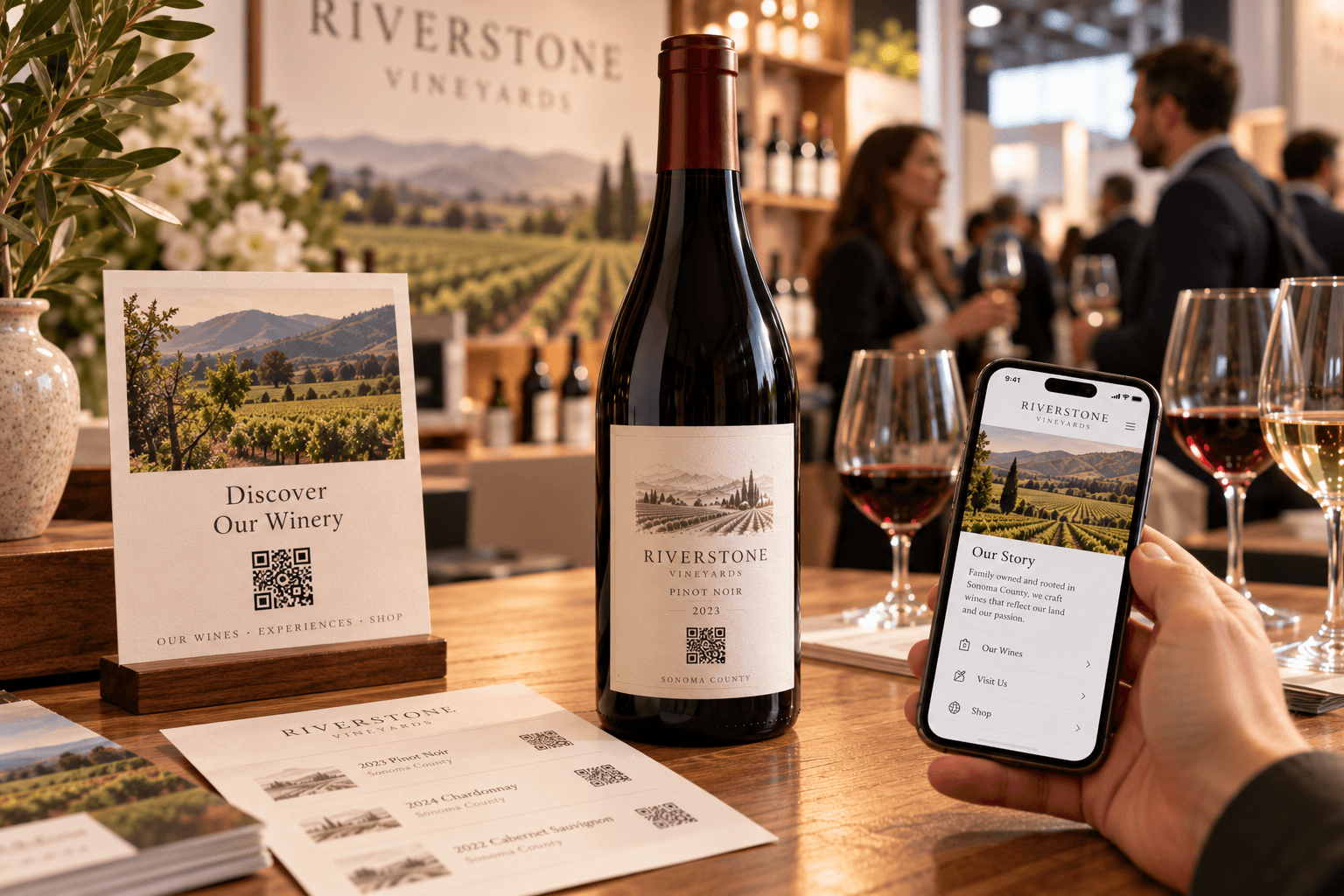
A wine fair can introduce your winery to hundreds of people in a single day.
Visitors taste new wines, compare producers, collect business cards, and move quickly between stands. For wineries, the challenge is making sure those conversations lead somewhere useful after the event.
QR codes can help bridge that gap.
A well-placed QR code gives visitors an easy way to access wine information, discover your winery, or find the next step without carrying another printed brochure.
But not every QR code needs to serve the same purpose.
Here are seven practical ways wineries can use QR codes at wine fairs, festivals, and trade events, along with tips for planning placements and measuring engagement.
1. Give visitors instant access to wine information
At a busy wine fair, visitors may taste several wines in a short period of time.
Remembering every grape variety, vintage, or product detail can be difficult, especially when they are visiting multiple stands.
A QR code beside a bottle or on a printed wine list can make information easier to access.
With Winetraqr, wineries can create digital labels containing product information such as ingredients and nutrition details. These pages are mobile optimized, allowing visitors to open them directly on their phones.
This can be particularly useful when someone wants to check information about a specific wine without interrupting a conversation at the stand.
Event tip: Place QR codes beside the wines being poured, rather than relying on one generic QR code for the entire stand.
Make sure visitors can identify which wine each code belongs to.
2. Create a digital introduction to your winery
A trade event is not always the right environment for telling your entire winery story.
Visitors may only have a few minutes to talk before moving to their next appointment or tasting.
A QR code can give them somewhere to continue exploring.
Winetraqr Premium Marketing Pages allow wineries to create a branded, mobile-friendly page featuring their story, photos, links, and active wines.
For example, a winery could include:
- A short introduction to the estate
- Vineyard and winery photography
- Information about its wines
- Links to its website and social profiles
- A link to its online shop
- Tasting booking or wine club links
Instead of handing every visitor several pieces of printed material, the winery can direct interested people to one digital destination.
Event tip: Put a marketing QR code on a small tabletop sign with a clear invitation such as "Discover our winery."
Keep the message short enough to understand while walking past.
3. Make your wine list easier to revisit
Printed wine lists are useful during tastings, but they are easy to misplace after an event.
A QR code can provide visitors with a digital destination they can revisit later.
For consumer festivals, that might be a winery marketing page highlighting the wines currently available.
For trade events, it might be a dedicated digital catalog or information page maintained by the winery.
The destination should match the audience.
A consumer tasting several wines may want to find the winery's shop or learn more about a favorite bottle.
A distributor or restaurant buyer may need additional commercial information, such as availability, pricing, or contact details.
Those trade-specific materials can be hosted separately and linked from an appropriate marketing destination.
Winetraqr Marketing Pages can serve as a starting point by providing links to external resources.
Event tip: Do not assume every visitor needs the same information. Consider whether your event is primarily consumer-facing, trade-focused, or a mix of both.
4. Give visitors an easy next step
A positive tasting experience creates interest.
The next step should be easy to find.
At a consumer wine festival, a QR code might direct visitors to a marketing page where they can access the winery's online shop, wine club, or tasting booking destination.
At a trade fair, the next step may be different.
A buyer might want to visit the winery's trade website, request additional information, or contact its sales team.
Winetraqr Marketing Pages support links to external websites and other destinations, allowing wineries to organize relevant next steps in one place.
The key is to avoid overwhelming visitors with too many options.
Choose the actions that matter most for the event.
For example:
Consumer festival: Explore our wines, Visit our shop, Book a tasting.
Trade fair: View our portfolio, Visit our trade website, Contact our team.
The links should lead to real, maintained destinations rather than pages created only for the event and forgotten afterward.
5. Use different QR codes for different placements
Not every QR code at an event will receive the same attention.
A code on a tasting table may be scanned more often than one on a brochure. A code beside a popular wine may receive more activity than one placed near the entrance.
Using separate QR codes can help wineries understand these differences.
Winetraqr Premium supports multiple QR codes for the same wine. Each code can have its own name and be tracked separately while continuing to display the same wine information.
For example, a winery could create separate codes for:
- A wine displayed at its event stand
- A printed tasting sheet
- A promotional card
- A regional wine fair
- A distributor presentation
The winery can then compare scan activity associated with those codes.
This is especially useful when the same wine appears across several events or printed materials.
There is one important distinction: Winetraqr's multiple-QR-code feature is documented for codes associated with the same wine. It should not be confused with automatically creating separately tracked marketing-page campaigns.
Event tip: Give each additional QR code a descriptive name that identifies its event or placement. That makes reporting easier afterward.
6. Learn which event QR codes get scanned
Wine fairs can be expensive and time-consuming.
Between stand fees, travel, samples, printed materials, and staff time, wineries have good reasons to evaluate what happened after the event.
QR code analytics can provide one part of that picture.
Winetraqr Premium includes scan analytics, and its multiple-QR-code feature allows wineries to filter scan activity by individual QR code.
This can help answer practical questions:
- Which wine-information QR codes received the most scans?
- Did visitors scan codes on tasting sheets or tabletop displays?
- How did scan activity differ between events?
- Did a particular wine generate more QR code engagement than others?
These insights can help inform future event planning.
However, scan counts are not the same as unique visitors, qualified leads, or sales.
A single visitor may scan several times, and many interested visitors may never scan at all.
Use scan analytics alongside other information, such as conversations with buyers, event contacts, and sales results.
Event tip: Record which QR codes were used at each event before the event begins. Otherwise, interpreting the data later can become difficult.
7. Keep the connection going after the event
The end of a wine fair does not have to be the end of the relationship.
Visitors may want to revisit a wine they enjoyed, learn more about the estate, or arrange a future tasting.
A marketing page gives them a destination they can return to after leaving the venue.
For wineries using Winetraqr Marketing Pages, the page can continue highlighting active wines and linking to relevant winery resources.
This makes the page useful beyond a single event.
For example, someone who scans a marketing QR code at a festival may later return to find the winery's shop or tasting booking page.
Trade contacts may prefer a direct follow-up from the winery team, supported by the relevant digital information.
Remember that scanning a QR code does not automatically provide the winery with a visitor's contact details or permission to send marketing messages.
If you want to collect leads, use an appropriate external signup or contact process and follow the applicable privacy and marketing consent requirements.
Keep compliance QR codes separate from marketing
For wineries selling wine in the EU, there is an important distinction between QR codes used for mandatory product information and those used for marketing.
EU wine e-label rules restrict sales and marketing content on electronic pages used to provide mandatory ingredient and nutrition information.
That means a QR code used for regulatory information should not simply lead to a promotional landing page.
A winery can use a separate marketing QR code for its story, shop, wine club, or event-related links.
At a wine fair, the distinction can be straightforward:
Ingredients and nutrition: A QR code that opens the wine's required digital product information.
Discover our winery: A separate QR code that opens a marketing page.
Clearly identifying each code helps visitors understand what they are scanning.
For EU wineries, Winetraqr recommends keeping these purposes separate rather than using the mandatory compliance QR code as a marketing channel.
How to prepare your QR codes before a wine event
QR codes work best when they are planned as part of the stand experience.
Before your next event, follow this checklist:
- Decide what visitors should be able to do after scanning.
- Check that each wine has the correct digital information.
- Prepare a separate marketing destination where needed.
- Choose QR code placements that visitors can easily see.
- Use clear instructions beside each code.
- Create additional wine QR codes if you need placement-specific tracking.
- Name your QR codes consistently for reporting.
- Print the codes at a size that scans reliably.
- Test every code on the actual printed material.
- Confirm that the destination works on mobile devices.
- Review scan activity after the event.
- Follow up separately with contacts who have agreed to hear from you.
You do not need a QR code on every surface.
A few well-placed codes with clear purposes will usually create a better experience than filling the stand with competing links.
What should wineries measure after the event?
Once the event is over, review the results while the experience is still fresh.
Start with scan activity for the codes you used.
Compare placements, wines, and events where you have separate tracking available.
Then look at the broader picture.
Did visitors ask for more information about certain wines? Did buyers request samples or follow-up meetings? Were visitors able to find the resources they needed?
These observations can help you improve the next event.
For example, if visitors frequently asked where to find your wine portfolio, you might make that destination more prominent on your next event sign.
If a tasting-sheet QR code received little activity, you could test a clearer instruction or a more visible placement.
The goal is not simply to increase scans.
It is to make information easier to access and give interested visitors a useful next step.
Make every event interaction easier to continue
Wine fairs, festivals, and trade events create valuable opportunities for wineries to meet new audiences.
QR codes can help those conversations continue beyond the tasting table.
They can make wine information easier to access, connect visitors with your winery story, provide links to useful destinations, and offer insights into which QR code placements receive attention.
With Winetraqr, wineries can create and manage digital wine labels with QR codes. Premium features include branded Marketing Pages, multiple QR codes for the same wine, and scan analytics.
Create your free Winetraqr account and start preparing your digital wine labels for your next event.
Unlock the story behind every bottle
- Unlimited wines and QR codes
- Automatic language translation
It's free to sign up. No credit card needed.