How Wine Exports Are Driving the Shift to Digital Labels
As wineries expand into international markets, digital labels are becoming essential for compliance, multilingual content, and consumer transparency. Learn why exporters are making the shift.

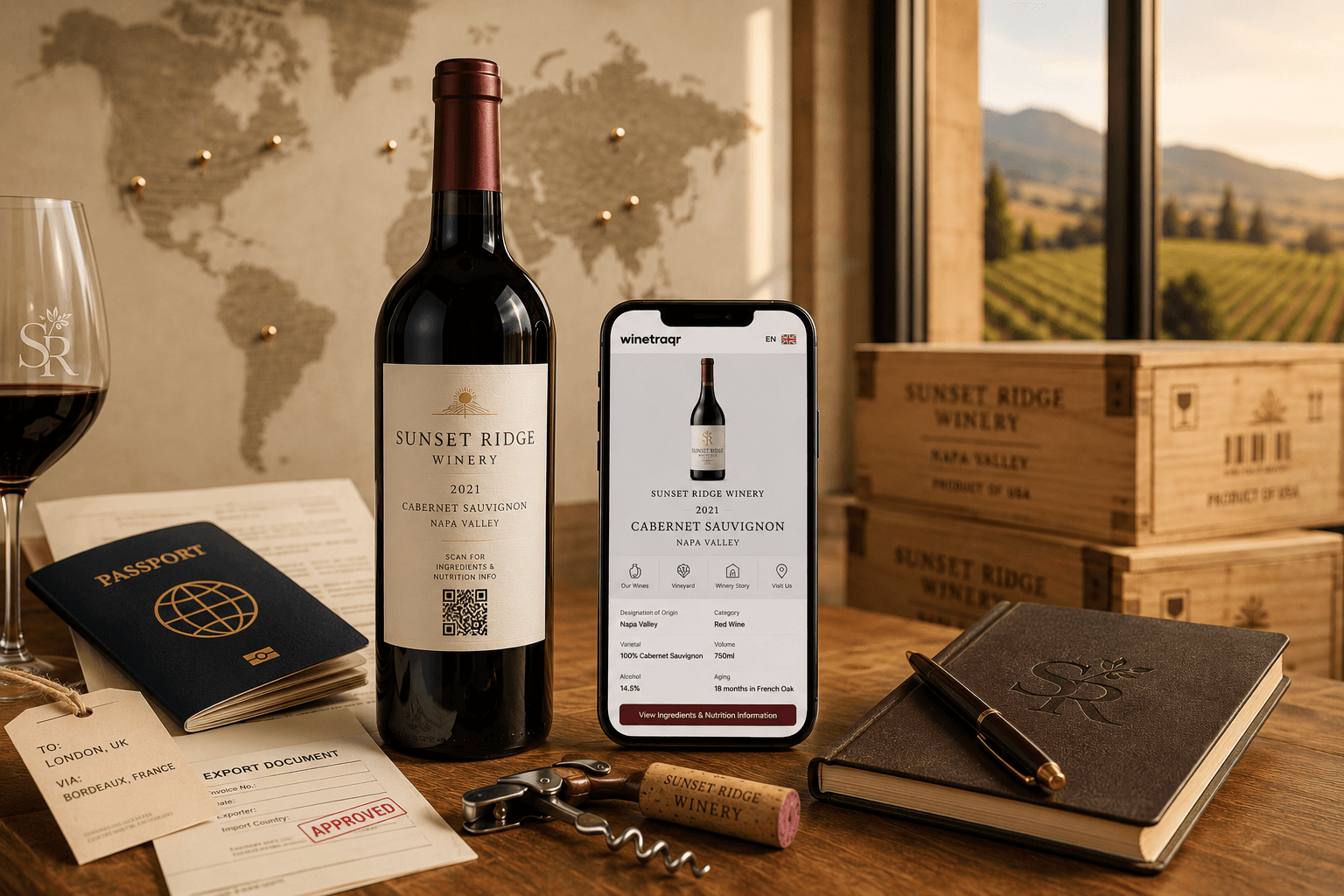
How Digital Wine Labels Simplify Export Compliance and Consumer Engagement
Wine exporters face rising regulatory complexity as global trade grows and governments increase labeling requirements. Digital wine labels, especially those with QR codes, make it easier for wineries to comply with rules, update product information, and build trust with international buyers. This guide explains why digital labeling is essential for modern wine exports, how solutions like Winetraqr work, and how wineries can implement these tools to meet evolving regulations and consumer expectations.
What are digital wine labels?
Digital wine labels are web-based product information pages accessed through a QR code on a wine bottle. These labels display regulatory details such as nutritional facts and allergen warnings, and can be updated remotely to stay compliant as rules change.
Why do wine exporters need digital labeling solutions?
Wine exporters need digital labeling solutions to meet strict and constantly changing international regulations while minimizing costs and errors. Markets like the European Union require nutritional and allergen disclosures on all imported wines. Physical labels have space and language limits, making it difficult to include every required detail for each market. Digital labels allow wineries to update content instantly, translate information for different countries, and reduce the risk of rejected shipments due to incomplete or outdated labels.
How do digital wine labels work in practice?
Digital wine labels rely on QR codes printed on each bottle. When scanned by a smartphone, the QR code directs consumers or regulators to an online label page containing required product information. The label content is managed centrally online, so wineries can update data, add languages, and modify disclosures without reprinting physical packaging.
Key steps in using digital labels:
- Create or upload wine product information (ingredients, allergens, nutrition, etc.).
- Use Winetraqr to generate a QR code that links to this information.
- Print the QR code on each wine bottle label.
- Update the digital label anytime regulations or product details change.
- Consumers and authorities scan the code to see the latest information in their preferred language.
What are the main benefits of using digital labels for wine exports?
Digital labels provide several advantages for wine exporters:
- Simplified compliance: Instantly update product information to meet changing laws without reprinting entire batches.
- Multilingual support: Serve more export markets by offering information in multiple languages.
- Reduced risk: Lower chances of rejected shipments or fines due to missing or outdated details.
- Cost and resource savings: Avoid manual label redesigns and minimize paper waste.
- (Premium) Enhanced consumer experience: With Winetraqr's marketing pages, share vineyard stories, tasting notes, or food pairings through the label interface.
- (Premium) Analytics and engagement: Track consumer scans and interests to inform marketing.
According to the International Organization of Vine and Wine (OIV), total global wine exports exceeded 111 million hectoliters in 2024. As more countries adopt stricter labeling rules, digital solutions provide a scalable method for global compliance and engagement.
What are the challenges of relying only on physical wine labels?
Physical labels limit the amount of required information that can be presented, especially in multilingual markets. Each country may mandate different disclosures, icons, and language versions, making it hard to keep labels up-to-date across multiple destinations. Manual updates increase the risk of errors or omissions, which can delay shipments or result in fines. Small producers without dedicated compliance teams are particularly exposed to these risks.
Repeatedly printing new labels for every regulatory change raises operational costs and increases environmental impact. Shipping wine with incorrect or incomplete labels can lead border authorities to reject the batch, requiring costly repackaging or destroying inventory.
How does Winetraqr support wine exporters with digital labeling?
Winetraqr is a digital labeling platform built specifically for wineries and wine exporters. It streamlines compliance and consumer engagement by:
- Auto-translating wine product labels into 25 languages
- Creating mobile-friendly digital label pages for each wine
- Allowing instant updates to allergens, nutritional information, and marketing content (Premium)
- Generating QR codes for use on physical packaging
- Tracking scan analytics for marketing insights (Premium)
A major benefit is automation: wineries can meet each export market's language and compliance rules without managing multiple label versions manually. Winetraqr users report fewer errors, faster time to market, and improved consumer trust thanks to clear, updated product disclosures. All changes are made once centrally, instantly reaching every bottle in every market.
Explore Winetraqr to see how it can help your winery simplify exports and enhance your customer experience.
How should wineries choose and implement a digital labeling platform?
Wineries should consider several criteria when selecting a digital labeling provider:
- Support for all target export markets and languages
- Up-to-date compliance with current regulations (e.g., EU Regulation 2021/2117)
- Ease of updating content across multiple products at once
- Analytics features to track consumer interactions
- Customizable branding and user experience
Implementation generally involves uploading product data, configuring translation and compliance settings and printing QR codes on future labels. Many wineries start with regulatory disclosures and expand over time to include additional consumer-focused content.
What should wineries do next?
Wineries aiming to expand exports or maintain compliance in existing markets should evaluate digital labeling solutions immediately. Begin by mapping your target export destinations and documenting each one’s labeling requirements. Assess whether a digital labeling platform like Winetraqr covers your markets and can integrate with your packaging process. Start with regulatory essentials, then use the platform’s consumer features to differentiate your wines for new buyers.
FAQs
What is a digital wine label?
A digital wine label is a web page containing required product details, accessible through a QR code on the wine bottle. It provides regulatory and consumer information that can be updated instantly and viewed in multiple languages.
Why are digital labels better for international wine exports?
Digital labels adapt quickly to regulatory changes, support many languages, and reduce the risk of shipping delays, fines, or rejected shipments due to labeling mistakes. They help wineries comply with foreign laws and create a richer consumer experience without redesigning physical labels for every market.
How can wineries get started with digital wine labeling?
Wineries can choose a digital labeling platform, upload their product data, generate QR codes, and add these codes to their bottle packaging. Platforms like Winetraqr help automate translations and compliance, making it easy to serve multiple export markets with minimal manual effort.
Unlock the story behind every bottle
- Unlimited wines and QR codes
- Automatic language translation
It's free to sign up. No credit card needed.