EU Wine Label QR Code Rules 2026: What Wineries Must Know
Learn the EU wine label QR code rules for 2026, including ingredient disclosures, multilingual requirements, compliance standards, and best practices for wineries using digital labels.

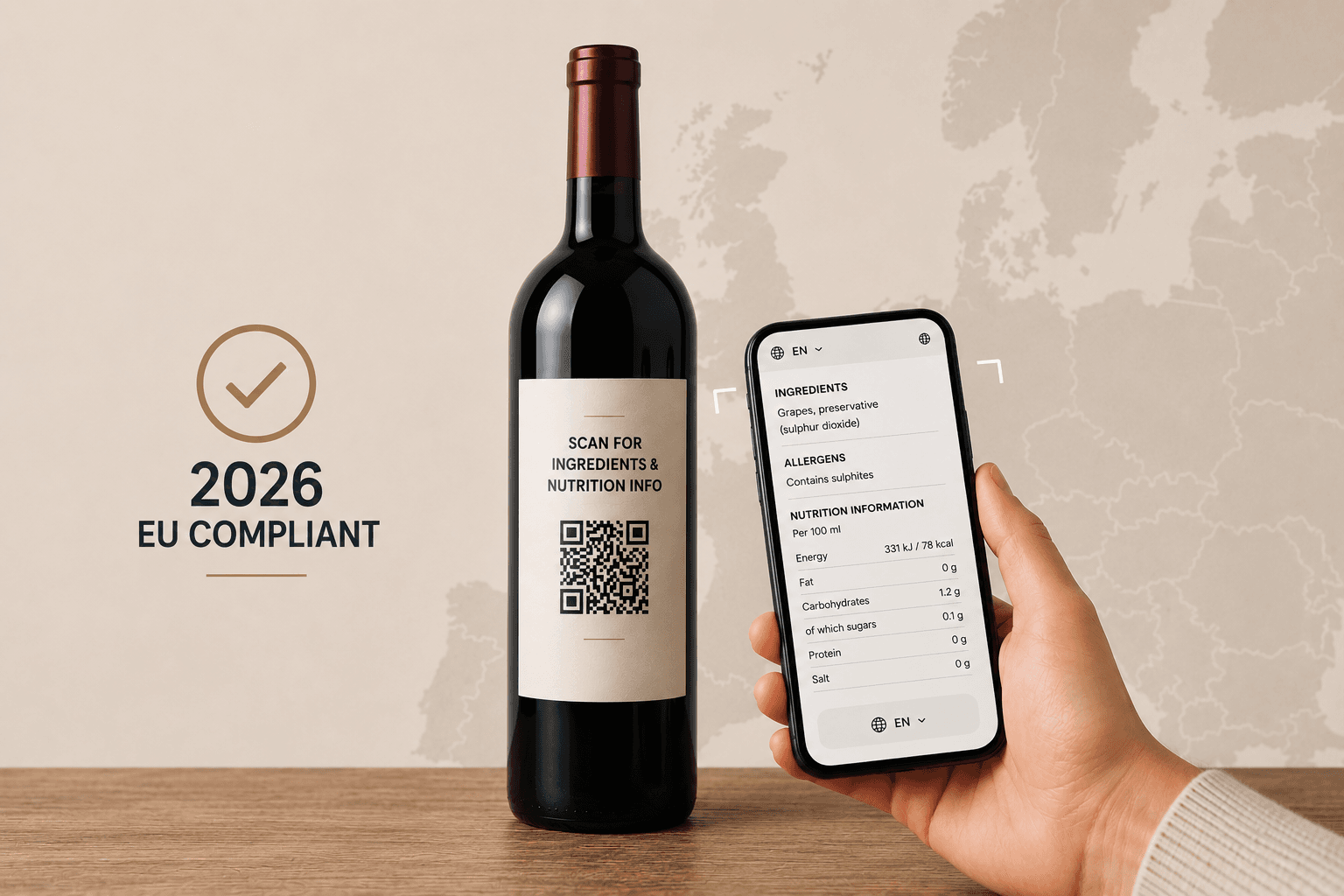
Introduction
Meeting EU wine label regulations has never been more important for wineries operating within the European market. With consumers increasingly demanding transparency and Regulation (EU) 2021/2117 now in full effect, producers must navigate a quickly changing digital landscape. By 2026, understanding and implementing EU wine label QR code rules is not just about legal compliance; it is essential for maintaining customer trust and securing a competitive advantage.
Understanding Regulation (EU) 2021/2117
Regulation (EU) 2021/2117 marks a significant change in wine labeling requirements throughout the European Union. The regulation requires every wine bottle to disclose comprehensive information directly to consumers, including nutritional values, an ingredient list, and allergen details. These requirements go beyond what many wineries have traditionally shown on their labels.
Certain critical information, such as allergens and alcohol content, must still appear on the physical label. However, the regulation now allows the use of QR codes, giving wineries the opportunity to provide detailed information digitally without overcrowding the product packaging.
Key Requirements for QR Codes on Wine Labels
What must wineries consider for EU wine label QR codes in 2026? Here are the key rules:
- Unique QR Codes per Product: Each wine product/SKU should have its own QR code tied to the correct ingredient and nutrition information. Different vintages typically require separate e-labels if composition or mandatory information changes.
- Informative, Non-Marketing, Tracking-Free Pages: The QR code landing page must contain only mandatory regulatory information (ingredients, nutrition, allergens, etc.). Advertising, promotional content, cookies, and user tracking are generally not permitted.
- Multilingual Accessibility: Information must be available in the official language(s) of the EU markets where the wine is sold. It does not necessarily need every EU language — only the languages required in the countries where the product is marketed.
Common Compliance Challenges and How to Overcome Them
Adhering to these requirements brings several challenges for wineries:
- Staying Current: When a new vintage is released or a recipe changes, the information linked through the QR code needs to be updated. Using dynamic QR codes lets wineries update digital content instantly, reducing the need for reprinting.
- Consistent Allergen Disclosure: Allergen information has to be consistent on both the physical label and the digital page. Any inconsistency can cause regulatory problems.
- Always-On Accessibility: Digital landing pages must remain continuously available and accurate while the wine is for sale. A dedicated and well-managed digital labeling platform helps maintain compliance for all markets and vintages.
- Translation Accuracy: With as many as 25 official EU languages, providing correct and regulation-compliant translations is complex and time-consuming. To avoid compliance risks and costly errors, wineries should use reputable translation services and careful review processes to ensure the accuracy of information provided in each relevant language.
Implementing QR Codes: Best Practices for Wineries
Achieving success with EU QR code labeling requires a methodical approach. Below are some recommended practices:
- Gather Comprehensive Data: Prepare nutritional information, ingredient lists, and allergen details for each wine and vintage.
- Choose a Compliance Solution: Select a platform such as Winetraqr. Winetraqr provides mobile-optimized digital labels and tools for effective information management, supporting regulatory needs and enhancing the customer experience.
- Use Dynamic QR Codes: Implement codes that link users to always up-to-date product landing pages. This flexibility helps save time and lower costs as products or regulations change.
- Coordinate with Printers: Work with label printing partners to make sure QR codes are scannable and compliant on all packaging formats.
- Continuous Monitoring (Premium Feature): Utilize Winetraqr’s analytics to track engagement and confirm all product information remains correct for every market and vintage.
Dedicated compliance platforms equip wineries to manage regulatory demands efficiently. Winetraqr supports compliance, enables branded digital pages, and offers valuable analytics, delivering benefits beyond mere regulatory adherence.
Conclusion
The EU’s QR code rules for wine labels in 2026 set new standards for transparency and consumer protection. Maintaining compliance is not only necessary for getting products on shelves but also for building lasting customer loyalty. By adopting digital solutions like Winetraqr, wineries can stay ahead in QR code compliance, deliver precise multilingual information, and ensure compliance with EU regulations. This approach also strengthens engagement with today’s well-informed and technology-oriented consumers.
Atklājiet stāstu aiz katras pudeles.
- Neierobežoti vīni un QR kodi
- Automātiska valodas tulkošana
Reģistrācija ir bezmaksas. Kredītkarte nav nepieciešama.