Digital Wine Labels vs Traditional Sheets: EU Compliance Guide
Compare digital wine labels and traditional product information sheets to see which delivers a better customer experience, simplifies updates, and helps wineries share more information with less friction.

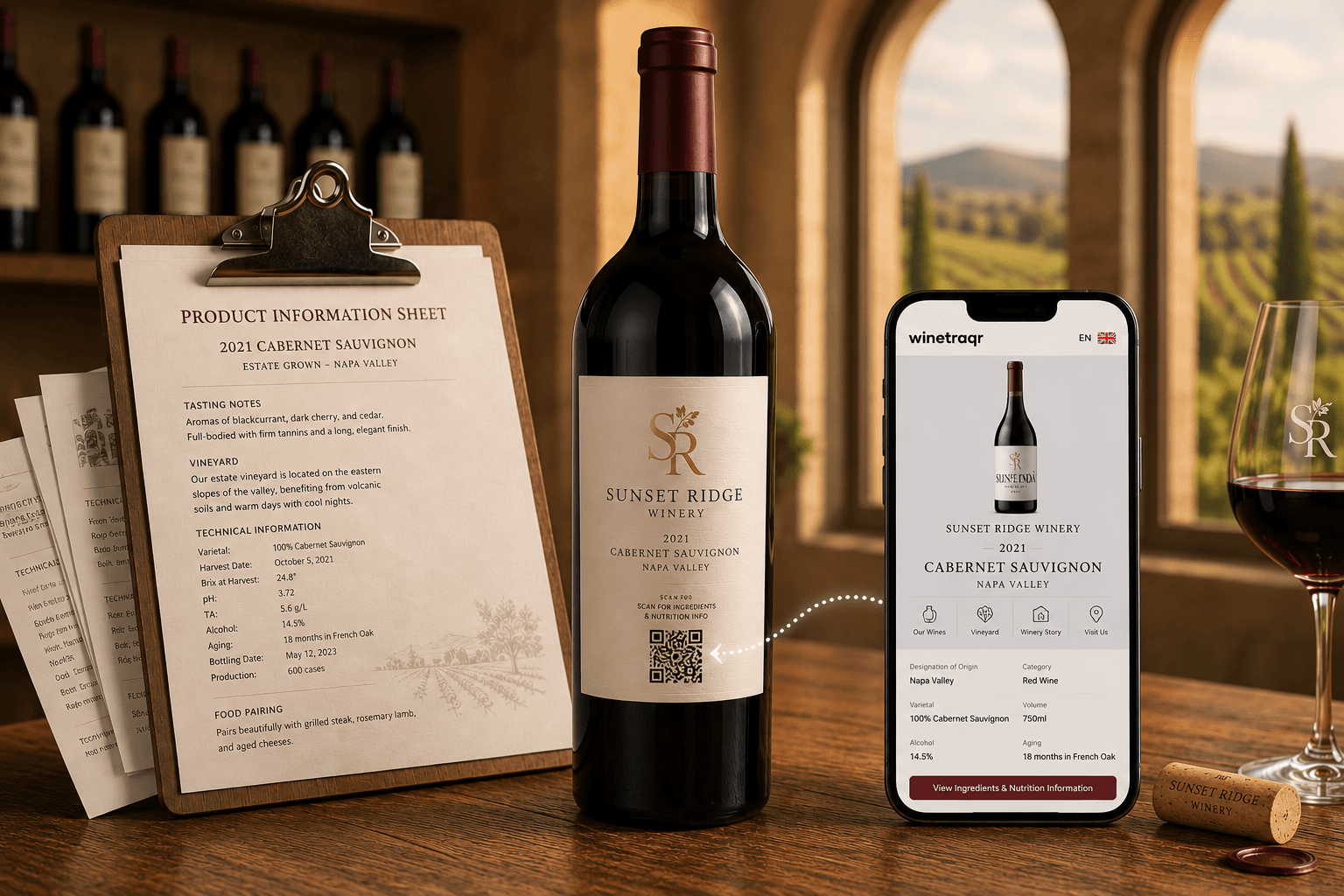
How Have Wine Labels Changed Under EU Regulation 2021/2117?
EU Regulation 2021/2117 has required major updates to wine labeling in the European Union. Wineries must now provide clear ingredient lists, nutritional information, and allergen content for each wine, regardless of label space. This push for transparency brings new compliance hurdles and opportunities for wine producers who export or sell across the EU.
Wineries that relied on traditional product information sheets are now under pressure to keep up with frequent regulation updates. As a result, digital wine labels are becoming a primary way to comply. This article outlines how these labeling methods differ, why digital labels are growing, and how wineries can adapt.
What is a traditional product information sheet for wine?
A traditional product information sheet is a printed document or flyer describing the main facts about a wine. These sheets are usually distributed with shipments or made available to importers, distributors, and retailers. They typically include:
- Grape variety
- Vintage
- Origin or region
- Alcohol by volume
- Regulatory compliance details (such as allergen content or sulfite declaration)
Wineries create these sheets using their own templates or software. Updating them involves reprinting and redistributing physical copies any time laws or ingredient lists change. For producers who export to several countries, managing updates and shipments for every sheet creates extra work and increases costs. Compliance management is especially challenging when regulations like EU 2021/2117 introduce new requirements or when country-specific rules are added.
How do digital wine labels help meet new EU labeling requirements?
Digital wine labels address the core challenges of EU Regulation 2021/2117 by giving producers a way to update required product data instantly. Most digital wine labels work by placing a QR code on the wine bottle. Scanning this code gives instant access to an online product page, where the winery can display:
- Ingredients and allergens
- Nutrition facts
- Language-specific compliance details
- Up-to-date regulatory information
Producers can update the online information at any time, so new compliance rules are reflected right away. Digital wine label platforms automatically translate product information into multiple languages, which supports exporters and ensures correct labeling in every market. This is especially helpful for wineries shipping to different EU countries, each with its preferred language and unique enforcement standards.
Winetraqr also offers marketing pages as part of the Premium plan. These allow wineries to add videos, winemaker notes, and other consumer-facing content in addition to the compliance QR code—features that traditional sheets cannot provide. This approach creates more opportunities for direct engagement. Online updates eliminate delays for both compliance and marketing content, helping wineries keep their information current across all markets.
How do digital wine labels and traditional product information sheets compare?
Compliance Updates
| Dimension | Product Information Sheets | Digital Wine Labels |
|---|---|---|
| Compliance Updates | Require reprinting and shipping. Manual rollout for each regulation change. | Instant updates online. New info is live on every scan. |
| Costs | Ongoing printing and physical distribution expenses. | One-time print (QR code on label). No reprints needed for changes. |
| Consumer Engagement | Passive. Text only. | Interactive. Video, pairing tips, real-time info, and language choice. |
| International Readiness | Sheets must be prepared in each language. | Pages translated automatically for global use. |
| Error Risk | Mistakes can linger until next reprint. | Errors can be corrected instantly. |
| Operational Overhead | Multiple steps for creation, approval, and logistics. | Centralized online dashboard for fast management. |
Traditional sheets can meet current requirements, but each regulation update means repeating the printing and distribution cycle. Errors or old versions may persist in the market. Digital wine labels offer a faster, more reliable process. By controlling updates online, wineries stay compliant and reduce manual work.
Which wineries are adopting digital wine labels?
Digital wine labeling has become increasingly common as wineries adapt to evolving regulations and multilingual market requirements. QR-based labels allow producers to update ingredients, nutrition information, and compliance details without reprinting physical labels, making them especially valuable for exporters managing multiple markets.
What should wineries do next to comply with EU wine labeling rules?
Most wineries facing frequent regulation changes, multilingual labeling, or broad distribution networks should look into digital wine label solutions. Key decision points include:
- Does your winery export to several countries or across the EU?
- Do you face frequent regulatory updates or product changes?
- Are you looking for ways to cut compliance costs or reduce labeling errors?
If yes, digital wine labels offer a way to stay current, control costs, and improve the consumer experience. Winetraqr provides a streamlined way to manage all wine product data online, support multiple languages, and update compliance info instantly.
For wineries prioritizing compliance and operational efficiency, moving from printed sheets to digital wine labels will help keep up with EU Regulation 2021/2117 and future changes. Consider evaluating leading digital labeling platforms that fit your workflow and export strategy now.
Atrakinkite istoriją už kiekvieno butelio.
- Neriboti vynai ir QR kodai
- Automatinis kalbų vertimas
Registracija nemokama. Kredito kortelė nereikalinga.