EU & US Wine Labeling Changes 2026: What Producers Must Know
Explore major EU & US wine labeling changes in 2026—ingredient disclosure, nutrition facts, digital labels, and QR codes. Stay ahead with Winetraqr.

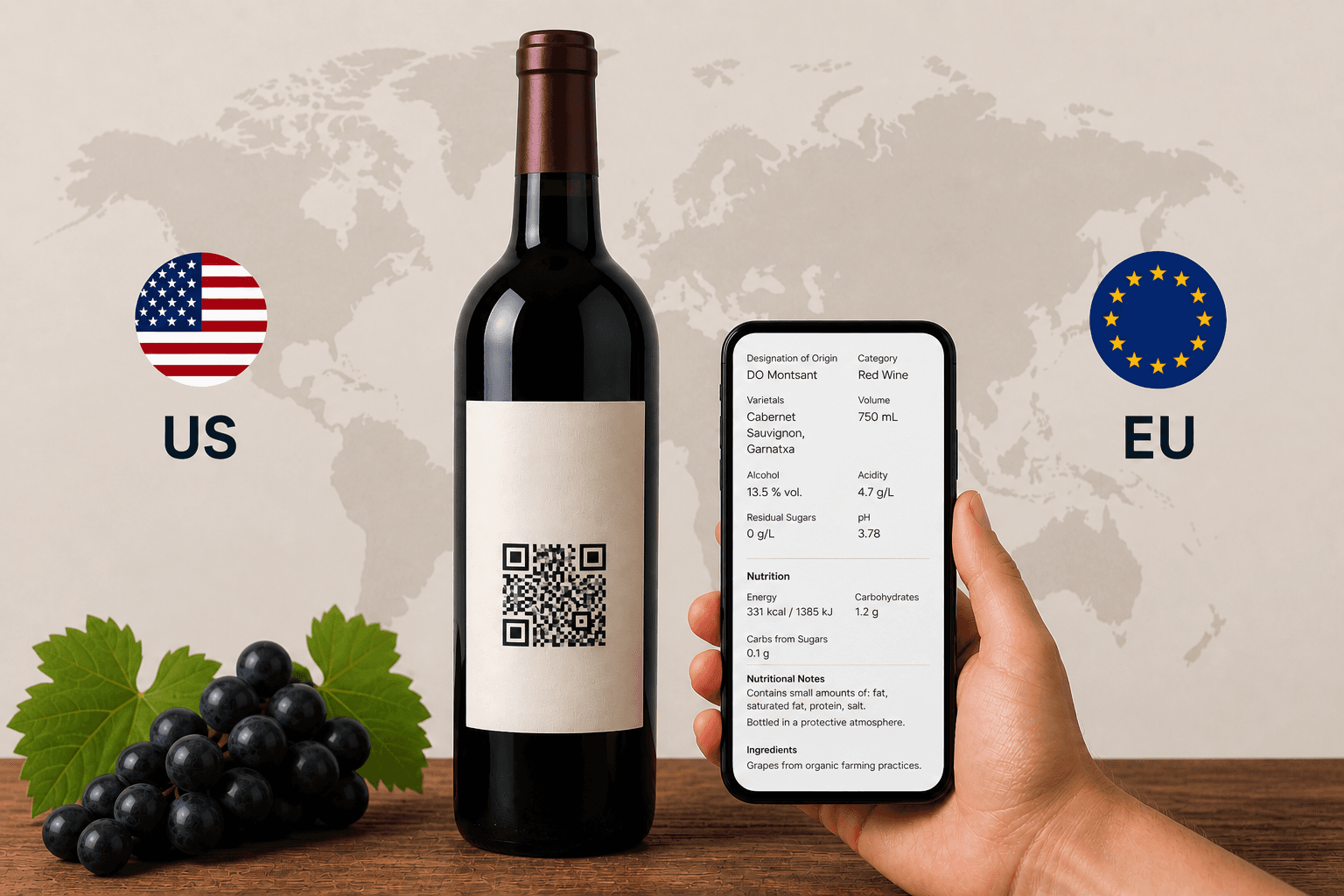
Wine labeling regulations are evolving, especially as new requirements around ingredients and nutrition come into effect.
If you sell wine in both the European Union and the United States, understanding the differences between these systems is essential for staying compliant.
Key Differences Between EU and US Wine Labeling
European Union (EU)
Under current EU regulations, wineries are required to provide additional transparency to consumers.
In most cases, this includes:
- Ingredients
- Nutrition information
- Allergen details
This information does not always need to appear directly on the physical label, but it must be accessible to consumers—often through a QR code linked to a digital label.
United States (US)
Wine labeling requirements in the United States are different and are regulated by the TTB (Alcohol and Tobacco Tax and Trade Bureau).
Typically, labels focus on:
- Alcohol content
- Producer information
- Government warnings
Unlike the EU, detailed ingredient and nutrition labeling is not always required in the same way.
Why This Matters for Wineries
If you distribute wine across different markets:
- You may need to meet stricter EU requirements
- You may need different labeling strategies per region
Traditionally, this has meant:
- Reprinting labels for different markets
- Managing multiple versions of the same product
A More Flexible Approach: QR-Based Digital Labels
To meet EU requirements without constantly reprinting labels, many wineries are using QR codes.
Each QR code links to a digital label that contains:
- Ingredients
- Nutrition values
- Allergen information
With this approach:
- You control exactly what information is displayed
- You can update content at any time
- You avoid reprinting bottles when regulations or details change
How Wineries Are Handling Compliance Today
There are generally two approaches:
Traditional
- Separate labels per market
- Frequent reprints
- Manual updates
QR-Based Digital Labels
- One label per market with a QR code
- Digital content managed separately
- Updates made without reprinting
Using Winetraqr for EU Compliance
Winetraqr allows you to create QR-linked digital labels for each of your wines.
Each QR code connects to a specific version of your label, containing the required compliance information.
If you need different versions (for example, for different markets), you can:
- Create separate label entries
- Generate unique QR codes
- Use the appropriate version depending on distribution
Final Thoughts
As wine labeling regulations evolve, especially in the EU, flexibility becomes increasingly important.
Unlock the story behind every bottle
- Unlimited wines and QR codes
- Automatic language translation
It's free to sign up. No credit card needed.